If you have called out a plumber, watched the water finally drain away, and then found yourself dealing with the exact same blockage a few weeks later, you are not imagining it and you are not alone. A Blocked Drain Melbourne search often comes from homeowners who have already had the problem “fixed” once, sometimes twice, only to see it return. When a drain keeps blocking after it has already been cleared, the issue is rarely bad luck. It usually means something underneath the surface was never actually resolved, and no amount of plunging or chemical cleaner is going to change that.
This article is not about the usual list of things that cause a first-time blockage, hair, wipes, food scraps, and so on. If you are here, you already know your drain blocks. What you want to know is why it keeps happening after someone has supposedly cleared it. Below are the seven most common reasons, and what actually needs to happen to stop the cycle for good.
1. The Blockage Was Cleared, But the Cause Was Not
This is the single biggest reason a drain blocked again after a plumber has already been out. Clearing a blockage and fixing a blockage are two different jobs. A standard drain auger or a quick jet blast will punch a hole through whatever is sitting in the pipe and get water flowing again, but it does nothing to address why that material built up there in the first place. If the pipe has a structural fault, a bad joint, or a section that constantly collects debris, the same spot will fill up again within weeks. A returning blockage in the same location is one of the clearest signs that the original job treated the symptom, not the cause.
2. Tree Roots Have Found Their Way Back In
Tree roots are drawn to the moisture and nutrients inside sewer and stormwater pipes, and once they have found a way in through a cracked joint or a small gap, cutting them back only buys time. Roots regrow quickly, often within a few months, and they will keep pushing back through the same entry point unless that point is repaired. If your recurring blockage lines up with the location of a mature tree, hedge, or root system on your property, root intrusion is very likely the underlying issue rather than anything going down your drain.
3. A Cracked or Collapsed Pipe Keeps Catching Debris
A pipe does not need to be fully collapsed to cause repeat problems. Even a partial crack or a section that has shifted out of alignment creates a ledge, gap, or narrowing that debris, wipes, and grease will snag on every time. Water flow that briefly clears the pipe will simply build the blockage back up against the same damaged section. This kind of fault will not show up from the surface, and it will not be fixed by clearing alone. It needs to be located and repaired, usually with a pipe relining or a spot repair once the exact position is confirmed.
4. A Sagging or Poorly Graded Pipe Is Trapping Water
Pipes are laid on a slight, consistent fall so gravity can do its job and carry waste and water away. Over time, ground movement, tree root pressure, or poor original installation can cause a section of pipe to sag, creating what is often called a “belly” in the line. Water and solids pool in that low point instead of continuing to flow, and that stagnant pool becomes the starting point for every future blockage. No amount of clearing will fix a belly in the pipe, because the physical grade of the pipe itself is the problem. This generally requires excavation or relining to correct the fall.
5. Grease and Fat Are Rebuilding Faster Than Expected
In kitchen drains specifically, fat, oil, and grease do not just wash away, they cool, solidify, and coat the inside of the pipe on the way down. Even after a professional clean, if grease continues going down the drain, a new layer starts forming almost immediately, and it clings fastest to pipe walls that already have surface damage or old residue from previous blockages. If your recurring blocked drain is a kitchen sink, this is usually less about pipe damage and more about what is going into the drain, combined with a pipe that may already be partially narrowed from years of buildup.
6. Ageing Pipe Material Is Breaking Down From the Inside
Melbourne’s housing stock spans everything from heritage inner-suburb homes with original clay or cast iron sewer lines to newer builds in the growth corridors. Older pipe materials corrode, flake, and roughen internally over decades, and that rough internal surface catches debris far more easily than a smooth modern pipe. A blockage that keeps returning in an older home, even without obvious tree root involvement, is often a sign that the pipe material itself has degraded to the point where it is contributing to every future blockage.
7. The Clearing Method Did Not Match the Actual Problem
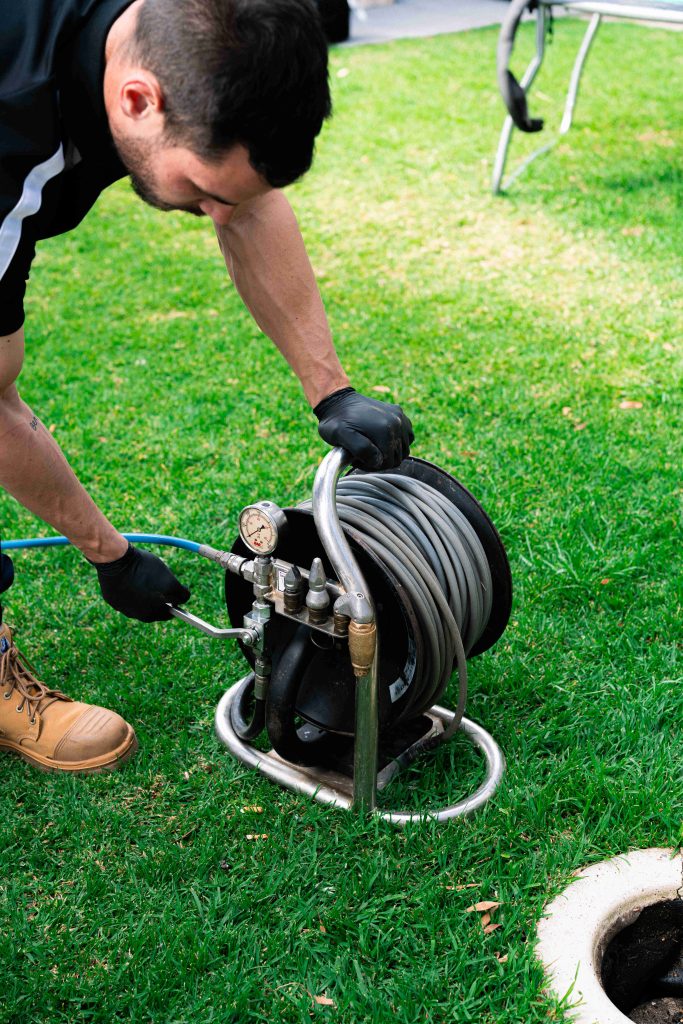
Not every blockage responds to the same treatment. A simple auger might punch through a soft clog but leave a root mass or a hardened buildup largely intact along the pipe walls. High-pressure jetting is far more effective at stripping grease, scale, and root growth from the full internal surface of the pipe, but even jetting will not fix a structural problem like a collapsed section or a belly. If a previous callout used a quick, low-cost method to get water moving again without a proper assessment of the pipe’s actual condition, it is very likely the real issue was never touched.
When Should You Get a CCTV Drain Inspection?
If your drain has blocked more than once in the same spot, or if it has come back within a few months of being cleared, a CCTV drain inspection is the next step, not another round of clearing. A drain camera is fed through the pipe and shows the exact condition of the line in real time, cracks, root intrusion, misalignment, corrosion, and belly sections are all clearly visible on screen. This removes the guesswork entirely and tells you precisely where the problem is and what is causing it, so the fix can be targeted rather than repeated.
A CCTV inspection is particularly worth arranging when:
- The blockage has returned two or more times in the same location
- The problem came back within weeks or months of a previous clear
- There are mature trees near the affected pipe run
- The property is older and the original pipe material is unknown
- Water is backing up, gurgling, or draining slowly across multiple fixtures at once
How to Permanently Fix a Recurring Blocked Drain
Once a CCTV inspection identifies the actual cause, the fix depends on what is found:
- Root intrusion at a joint is often resolved with high-pressure jetting to clear the roots, followed by a relining or spot repair to seal the entry point so roots cannot return.
- A cracked or collapsed section typically needs pipe relining, which forms a new pipe inside the old one without full excavation, or in more serious cases, a section replacement.
- A sagging or bellied pipe usually requires that section to be dug up and relaid on the correct fall, since relining cannot correct the underlying grade.
- Grease buildup in kitchen lines is often managed with regular jetting on a maintenance schedule, combined with changes to what goes down the drain.
- Degraded older pipe material may need a full relining of the affected section to restore a smooth internal surface that debris cannot easily catch on.
The key point is that clearing and repairing are not interchangeable, and only one of them stops the problem from coming back.
The Bottom Line
A drain that keeps blocking is telling you something, and it is rarely telling you to call for another quick clear. If you have already had a blockage removed once and it has returned, the underlying cause is still there, whether that is a root intrusion, a structural pipe fault, a grading issue, or ageing pipe material. A proper CCTV inspection is the only reliable way to find out which one applies to your property, and it is the difference between paying for another temporary fix and finally putting the problem to rest.
If your drain keeps blocking no matter how many times it has been cleared, our team can carry out a full CCTV drain inspection to find the exact cause and give you a clear, upfront plan to fix it permanently. Call King and Sons Plumbing on 03 9993 7122, available 24 hours a day, 7 days a week, across Melbourne.